Go Villain or Go Home: How Celebrities Figured Out That Being the Bad Guy Actually Pays
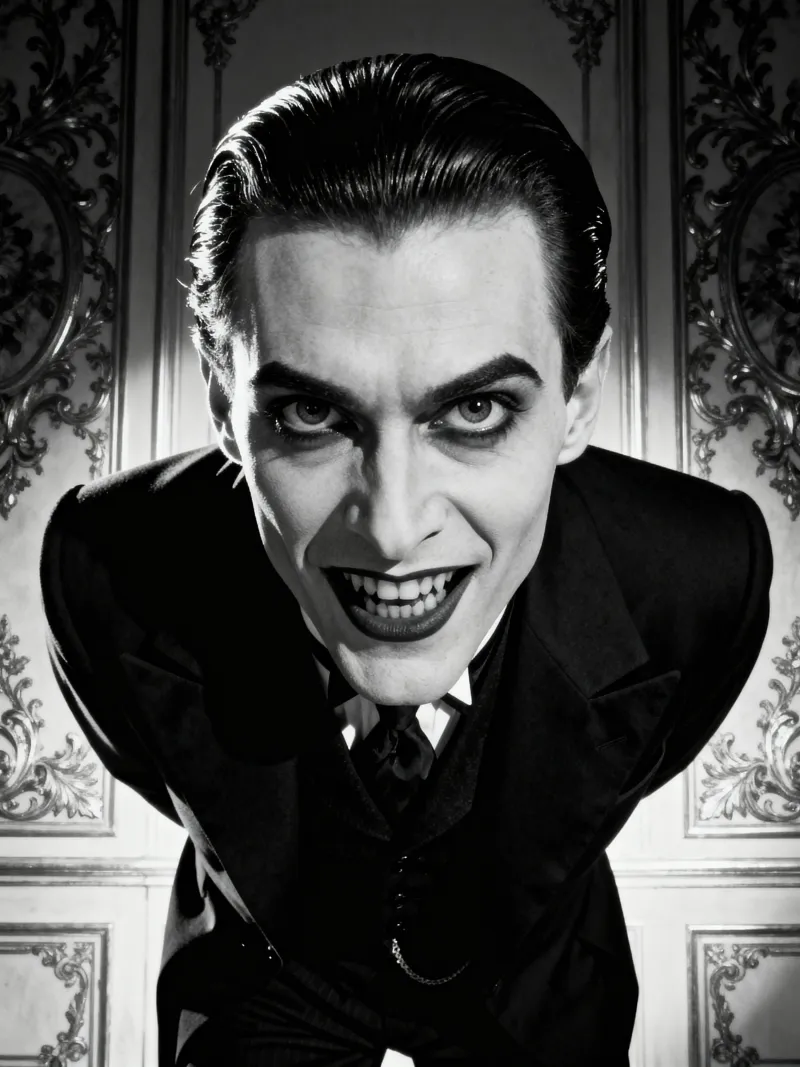
Photo: celebrity dramatic villain pose dark aesthetic stage spotlight, via r2-us-west.photoai.com
Somewhere between the fifteenth celebrity crying on a ring-light livestream and the hundredth "I've done a lot of work on myself" press tour, the culture collectively shrugged. We'd seen the playbook so many times it had practically become satire. Get caught doing something messy, disappear for three to six months, resurface with a carefully worded Notes app statement, and book a redemption-arc profile in a magazine that still exists. Rinse, repeat, collect check.
But a growing number of celebrities have looked at that script, set it on fire, and decided to do something far more interesting — and, frankly, far more lucrative. They went full villain. On purpose. With intention. And it is working spectacularly.
The Apology Economy Is Officially Broke
Here's the thing nobody in a publicist's office wants to admit out loud: audiences are exhausted by performed contrition. We've developed a finely tuned radar for fake remorse, and the moment a celebrity sits down for a "vulnerable" interview wearing a carefully selected oversized sweater to signal humility, half of social media is already writing the dunking tweets before they've even finished the first sentence.
The apology industrial complex has devalued its own currency. When everyone apologizes for everything with the same recycled language about "growth" and "accountability," the apology stops meaning anything. And when the apology means nothing, the original offense becomes the only thing people actually remember.
So what happens when a celebrity just... doesn't apologize? What happens when they double down, lean in, and essentially say "yeah, that's me, deal with it"? Turns out, people lose their entire minds — and then they cannot look away.
The Calculated Chaos Strategy
Let's be very clear about something: the best villain eras are not accidents. They are brand strategies wearing a Halloween costume. The celebrities who have successfully weaponized their own toxicity are not simply unhinged — they are strategically unhinged, which is a completely different and somehow more impressive skill set.
Think about the mechanics of it. A celebrity does something controversial. The internet erupts. Instead of retreating, they pour gasoline on the discourse — a cryptic post here, a pointed interview answer there, maybe a merch drop that directly references the drama. Every single reaction, whether positive or outraged, is engagement. Every think piece written about them, including this one, is free advertising. The villain era is essentially a perpetual motion machine powered entirely by other people's feelings.
The formula works because outrage and obsession are neurologically pretty similar experiences. Both keep you hitting refresh. Both keep you talking. And in the attention economy, talking IS the product.
Case Studies in Embracing the Chaos
You don't have to look hard for examples. The entertainment landscape is littered with personalities who figured out that leaning into their "problematic" reputation was more financially rewarding than fighting it.
Consider the reality TV space, where the villain edit used to be a career-ender and is now essentially a launchpad. The cast member who causes drama, says the thing everyone else is thinking but won't say, and refuses to apologize in the confessional booth? That person books the most brand deals. They get the spin-off. They show up on every other podcast for the next eighteen months because they are interesting, and interesting is the scarcest resource in entertainment.
Then there's the music industry, where feuds that would have once required careful PR navigation are now treated as content calendars. Diss tracks get more streams than love songs. Feuds generate more headlines than album releases. Some artists have essentially built entire careers on being the person other artists are beefing with — a role that requires almost zero creative output and generates enormous cultural real estate.
Politics, of course, cracked this code before anyone else. The lesson was learned and immediately exported back into entertainment, influencer culture, and beyond: being the person people hate-watch is more powerful than being the person people politely admire.
Why We Can't Quit the Villain
The psychological mechanics here are genuinely fascinating, and also slightly depressing if you think about them too hard. Humans are wired to pay more attention to threats than to pleasant stimuli — it's basic evolutionary psychology, and social media platforms have essentially built entire revenue models around exploiting it.
A celebrity who makes you feel warm and fuzzy gets a smile and a scroll. A celebrity who makes you furious gets a comment, a share, a subtweet, a group chat screenshot, and a fifteen-minute voice memo to your best friend explaining exactly why they are the worst. Guess which one the algorithm rewards.
There's also a parasocial element at play. When a celebrity commits hard to a villain persona, it paradoxically creates a more authentic connection than the carefully curated "relatable" content that dominates most feeds. The villain is, in a strange way, honest. They're not pretending to be something they're not. And audiences, who have developed finely calibrated BS detectors after years of influencer culture, will often reward perceived authenticity even when that authenticity is "I am genuinely kind of terrible."
The Risk Calculation
None of this means the villain era is without risk — it absolutely is. The strategy requires a very specific kind of celebrity: one who can absorb enormous amounts of negative energy without it actually destroying their mental health or their career infrastructure, and one who has enough existing cultural capital to make the bet.
Villain eras also have a shelf life. The chaos has to keep escalating to maintain relevance, and there's a ceiling to how far you can push before the audience stops finding it entertaining and starts finding it genuinely exhausting. The goal is to occupy the space between "compelling train wreck" and "actual crisis" — a tightrope that requires more skill than it looks like from the outside.
And occasionally, someone miscalculates and goes from "entertaining villain" to "person the internet has decided is actually done." The line between those two things is thin, frequently arbitrary, and almost impossible to predict in advance.
The Bottom Line
The villain era trend tells us something true and a little uncomfortable about where we are culturally: we have optimized our media ecosystem so thoroughly for engagement that being genuinely dislikable is now a viable career strategy. The celebrities leaning into their bad-guy rebrand aren't delusional — they've read the room correctly.
The real question isn't why they're doing it. The real question is why we keep giving them exactly what they want.
(Narrator: We will absolutely keep giving them exactly what they want.)