The Mass Exodus: What Actually Happens When a Celebrity's Entire Fan Base Taps Out
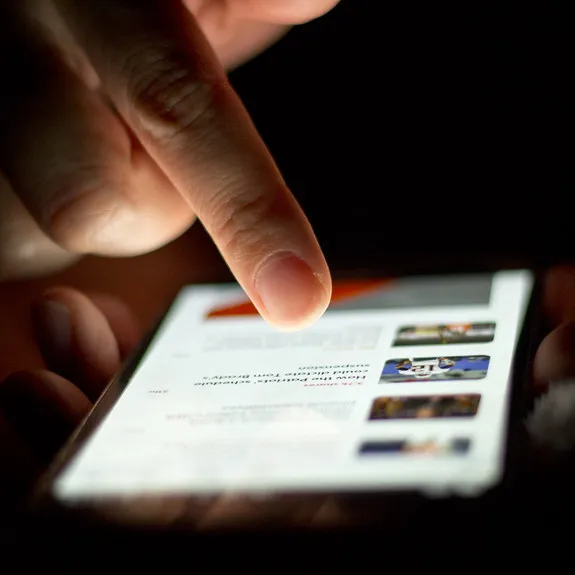
Photo: Japanexperterna.se, CC BY-SA 2.0, via Wikimedia Commons
Cancel culture gets all the press. The pile-ons, the trending hashtags, the dramatic statements from PR teams — it's loud, it's chaotic, and it usually burns out within a news cycle or two. But there's a quieter, slower, and arguably more terminal phenomenon happening in parallel that doesn't get nearly enough analysis: the mass unfollow. Not the angry mob. Not the boycott campaign. Just millions of people, individually, opening an app and pressing a button.
No statement. No drama. Just gone.
This is the version that doesn't bounce back.
Cancel Culture vs. Audience Abandonment: Not the Same Thing
Let's draw a line here because conflating these two things is a mistake that most coverage makes repeatedly.
Cancel culture, in its current form, is reactive and tribal. It's organized around a specific incident, amplified by a specific community, and it tends to be loud in direct proportion to how much the target was beloved beforehand. The bigger the fall, the louder the noise. And crucially — it almost always involves people who were never really fans to begin with piling on alongside the ones who feel betrayed.
Audience abandonment is different in every meaningful way. It's not organized. It's not loud. It doesn't have a hashtag. It's just the slow, collective realization among actual fans that they've outgrown someone, or that someone revealed themselves to be something the fans didn't sign up for. The unfollows don't happen in a single viral moment — they happen in waves, over days or weeks, each one triggered by something slightly different.
The distinction matters because the recovery paths are completely different. You can survive a cancel attempt if you're strategic. You cannot survive your own audience simply deciding you're not worth their time anymore.
The Anatomy of a Mass Exodus
Every major fan base collapse follows a surprisingly consistent pattern, and once you see it, you can't unsee it.
Phase One: The Crack. Something happens. Maybe it's a tone-deaf post during a national crisis. Maybe it's a brand deal that contradicts everything the creator claimed to stand for. Maybe it's a leaked text, a messy divorce, or just one too many "authentic" moments that feel suspiciously scripted. Whatever it is, it's the first visible fracture in the relationship between creator and audience.
Phase Two: The Defense and the Backlash to the Defense. The creator or their team responds — and this is almost always where the real damage happens. A genuine, specific, non-defensive acknowledgment might slow the bleeding. What usually happens instead is some version of "I'm sorry you felt that way," or a carefully worded statement that's clearly been through three rounds of legal review. The audience, which has been giving the benefit of the doubt for years, suddenly has no more doubt left to give.
Phase Three: The Quiet Departure. This is the actual mass unfollow phase. No announcement. No dramatic goodbye posts. People just stop engaging, stop watching, and eventually stop following. The algorithm notices before the creator does. Reach drops. Engagement tanks. Brand deals get quietly renegotiated or dropped.
Phase Four: The Overcorrection. Almost every creator who reaches this phase makes the same mistake: they try too hard to win people back. The content gets more frequent, more emotional, more desperate. They start chasing trends they previously ignored. They collaborate with people they previously dismissed. The audience that stayed — which is always smaller and more skeptical — watches this unfold and loses even more respect.
Case Studies in Self-Destruction
YouTube has produced some of the most instructive examples of this phenomenon in action, partly because the metrics are so visible and partly because the platform's creators have spent years building parasocial relationships that make the eventual collapse more spectacular.
The beauty community's 2019-2020 implosion was essentially a masterclass in Phase Two failures. Multiple creators who'd built audiences in the millions on the premise of authenticity and community got caught up in feuds, receipts, and allegations that exposed the gap between their on-camera personas and their actual behavior. The unfollows weren't just about the specific incidents — they were about the realization that the relationship the audience thought they had was partially constructed.
Lifestyle influencers who built followings around aspirational content — clean eating, perfect relationships, curated aesthetics — have been particularly vulnerable to this dynamic during periods of social upheaval. When the world is visibly on fire, someone posting about their morning smoothie routine without any acknowledgment of reality reads as either oblivious or cynical. Either interpretation costs followers.
The numbers in some of these cases are genuinely staggering. Drops of two to three million followers within a week aren't uncommon once the momentum builds. And unlike a single viral controversy, a mass unfollow event tends to keep bleeding long after the initial trigger has been forgotten.
Does the Count Ever Come Back?
Honestly? Rarely, and never in the same form.
The creators who've managed to stabilize after a mass exodus almost always did it by rebuilding with a fundamentally different audience rather than winning back the one they lost. The original fans — the ones who were there from the beginning, who felt genuinely connected — don't typically come back once they've made the decision to leave. That's the parasocial relationship's dirty secret: it feels intimate on the way in, but it's remarkably clean on the way out.
What sometimes happens is a pivot. The creator leans into the controversy, reframes their identity around it, and finds a new audience that's attracted to the drama rather than the original content. This is a viable strategy, but it's a different career than the one they had before. It's not recovery — it's reinvention.
The creators who genuinely recover — and there are a few — tend to share one characteristic: they went quiet. Not a fake hiatus with a scheduled comeback, but an actual period of absence that let the internet's attention cycle move on. When they returned, they returned with something new enough that it could be evaluated on its own terms.
What It Actually Means
The mass unfollow is ultimately a referendum on authenticity in a media environment that has been selling authenticity as a product for over a decade. The audience got sophisticated. They learned to read the signs. They started noticing when the "real" moments were staged, when the vulnerability was calculated, when the relatable content was just a strategy.
The creators who understand this — who treat their audience as people rather than a metric — tend to have smaller but more durable followings. The ones who optimized for growth at the expense of genuine connection built something that looks impressive right up until the moment it doesn't.
The button is always right there. One tap. No explanation required.
And when enough people use it at the same time, no PR strategy in the world is loud enough to drown out that silence.